Category — Memoir
Maile Colbert/Letter to the Editor
Maile Colbert
…………………………………………………………………………………………..
Letter to the Editor
on the Morning After The Execution
I’m very sorry I won’t be meeting my deadline. I’ve been battling technology and all its little hiccups and disasters for a week now, attempting to make another deadline for a group show. And a podcast. And the new class I’m teaching. And the artwork for an album. And all of the little pieces I put out to the world hoping for some sort of human feedback wave to continuously wash over me and tell me I am still doing, still doing, still doing and not lost and not too sick or too tired or too brain-fogged.
It was in the background noise all this week, dropping in and out of the periphery… enough for me to shake my head at the country I left, that I find myself defending in spite of and despite of… because I miss it. That strange, warm, friendly and dangerous… failing, falling giant.
This morning, a break from battling yet another technology battle… I remembered it was set to happen last night. I started reading the news with all of the geographical and cultural and economical and situational distance between us. The sort of distance good reporting can provide. It all crashed when I read about his last meal.
He had refused the option of a last supper. He refused to accept that this thing looming closer could possibly happen. Whose nature could accept that? What nature could accept that? He had a cheeseburger and baked beans and grape soda. There was more, but that’s what I remember. The grape soda. There is something so vulnerable about a person eating. He had grape soda.
I have a tendency to position myself closer to animal rights than human rights issues. There is something personal in this I struggle to articulate, though I always manage to come up with something when I’m asked to defend this position… which happens more and more. It’s seen as a luxury that can’t be afforded. I believe in the interconnectivity of things… I believe these issues are connected. Today I find myself wondering, however, how we could possibly manage to take care of the flora and fauna of this world, when we could poison the life out of a human being and call it law.
Mornings like this I wonder if I should go on medication. I take a bath to attempt to thaw and lighten. I notice I forget to take a breath, so I inhale enough for three. The movement of my diaphragm pushing against the water causes a wave. The wave travels and returns just as I inhale again. For a little while, I am breathing with the water. I am thinking only of breath and feeling only the water.
Then I think of grape soda, and quickly switch to thinking of the class I have to teach tomorrow… and how will I get such a large file to England for a show… and did I finish everything for the podcast launch…and what will I write to Mike about not making the deadline…
All My Best,
Maile
…………………………………………………………………………………………..
COLBERT
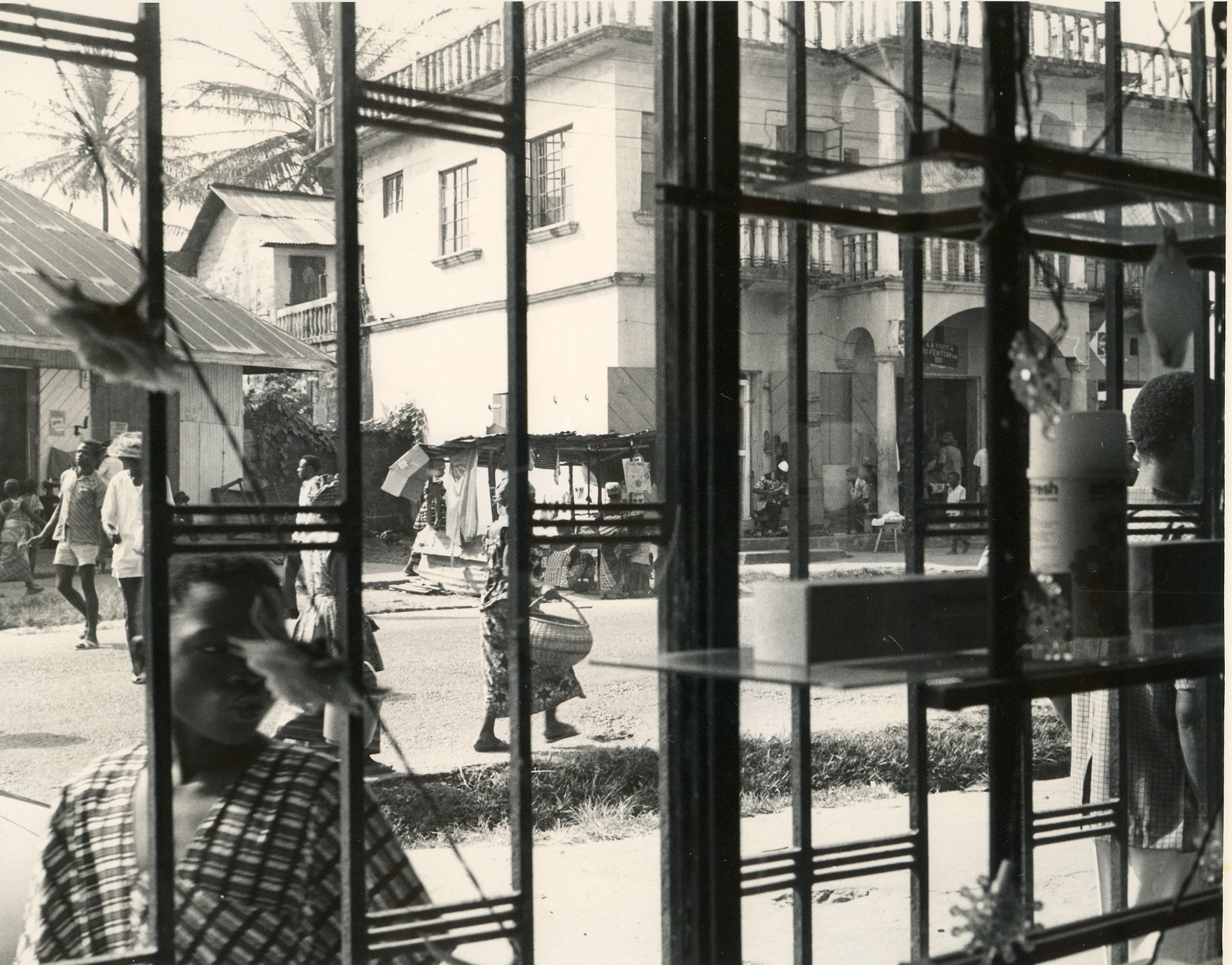
[img src=http://ragazine.cc/wp-content/flagallery/colbert/thumbs/thumbs_dscn6446.jpg]
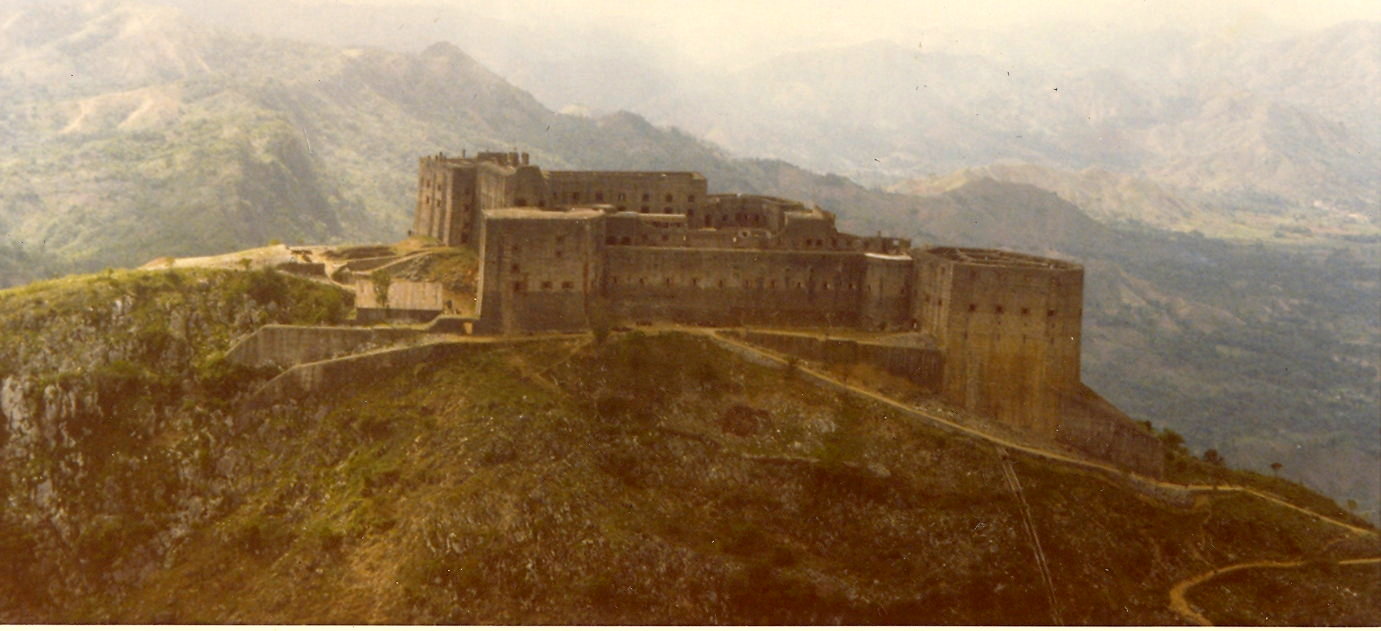
[img src=http://ragazine.cc/wp-content/flagallery/colbert/thumbs/thumbs_dscn6447.jpg]
[img src=http://ragazine.cc/wp-content/flagallery/colbert/thumbs/thumbs_dscn6448.jpg]
[img src=http://ragazine.cc/wp-content/flagallery/colbert/thumbs/thumbs_dscn6449.jpg]
[img src=http://ragazine.cc/wp-content/flagallery/colbert/thumbs/thumbs_dscn6450.jpg]
[img src=http://ragazine.cc/wp-content/flagallery/colbert/thumbs/thumbs_dscn6451.jpg]
[img src=http://ragazine.cc/wp-content/flagallery/colbert/thumbs/thumbs_dscn6452.jpg]
[img src=http://ragazine.cc/wp-content/flagallery/colbert/thumbs/thumbs_dscn6454.jpg]
[img src=http://ragazine.cc/wp-content/flagallery/colbert/thumbs/thumbs_dscn6455.jpg]
…………………………………………………………………………………………..
About the contributor:
Maile Colbert is an intermedia artist with a concentration on sound and video, relocated from Los Angeles and living and working between New York and Lisbon, Portugal. She spent the last two years collaborating with Binaural/Nodar and is currently director of Cross the Pond, an organization based on arts and cultural exchange between the U.S. and Portugal.
She holds a BFA in The Studio for Interrelated Media from Massachusetts College of Art, and a MFA in Integrated Media/Film and Video from the California Institute of the Arts.
October 27, 2011 Comments Off
John E. Smelcer/Memoir
Crow, Raven,
and the Hughes-Plath
Family Tree
By John E. Smelcer
My friendship with Ted Hughes began unexpectedly in the fall of 1997. I had been invited to read my poetry at the Guildford Literary Festival in England. As a life-long Alaskan, many of the poems were about Raven. Afterward, an iron-gray-haired gentleman asked me to join him for pints at a pub just down the street from the Electric Theatre.
I have to admit that at the time I didn’t know he was the Poet Laureate of England and Sylvia Plath’s ex-husband. Needless to say, because free beer was involved, I accepted the invitation. Neither Ted nor I could have known the enduring consequences of that encounter and how I would become intricately bound to his legacy and history.
With similar interests in anthropology, mythology, and poetry, we had an enjoyable and lively conversation, which lasted right up until, as Eliot once wrote, the barkeep’s last Hurry up, please! It’s time. At some point, we began to co-write a poem about how Raven-Crow created Grendel in Beowulf, taking turns writing alternating lines, drunkenly hoisting Guinness to our poetic genius in between. I offer the poem for the first time.
BEOWRAVEN
Raven wanted a pet
so he slogged into a fen
fashioned a fanglorious beast
from filth and slime and muck
named it Grendel
stropped its wicked claws and teeth
stroked its mudruckled fur
then pointed at Hrothgar’s unwary keep
commanded
“Fetch!”
& the gorged and grisly creature
always returned
with a heap of bones
Within a week, Ted created a limited edition broadside of the poem, to which we both lent our signatures. Over the next couple of months, we corresponded about Raven Speaks, a slender booklet of my poetry Hughes was to publish from his home in Devon. Ted encouraged me to keep writing Raven poems for a future full-length volume akin to his Crow. Shortly after producing the chapbook, Ted was diagnosed with cancer. He passed away less than a year later from complications. Raven Speaks was among his last literary projects.
Six years later, in 2004, I was again in England, this time studying Shakespeare at Cambridge. I lived in Caius College, one of the oldest of the ancient colleges. Almost daily I walked past the house where Ted and Sylvia had once lived. One sunny afternoon I bought a used copy of Hughes’s Crow at an open-air market just across from King’s College, where dozens of stalls were set up around the cobblestone square – vendors selling everything from T-shirts to jewelry, from bread and pastries to fresh vegetables, local artwork to used books. I think I paid two pounds for it. Re-reading the book for the first time since Ted’s death, my interest was rekindled in a way that I can only call consuming. I immediately set out to write the full-length Native American cousin to Crow. The poems came out of me as fast as I could write them. I’ve never experienced such intense poetry writing like it since. I swear, at times I could barely breathe. In one memorable day alone, I wrote five of the poems! On the long trans-Atlantic flight home I wrote another three or four. Raven is finally complete and ready to take its rightful place alongside its older brother.
In 2006, I learned that Ted’s son, Nick, lived in Fairbanks, Alaska, where I grew up and attended elementary school, junior and senior high school, and university. At the time, I was living outside Anchorage. I introduced myself to Nick as a friend and disciple of his father. Nick and I were about the same age. Like me, Nick loved to fish. In the following two summers, we fished together for grayling on the upper Chena and Chatanika Rivers near Fairbanks. I even took him fishing near my cabin at Tazlina Village. I remember one day while fishing on the Chatanika, I caught a foot-long grayling. Just as I was about to lift it into the boat, the biggest pike we ever saw in our lives violently snatched the grayling off my line. It must have been four feet long and as thick around as a man’s thigh. We spent the rest of the day trying to catch that monster, but we never saw it again. On another fishing trip, Nick caught a salmon while standing on a steep bank. The fish literally yanked him off the slippery bank into the icy river. True fisherman as he was, when Nick re-emerged, he still had the salmon hooked. We grilled it for dinner that evening, complemented by a good bottle of wine.

Nick loved fishing in Alaska.
For our last fishing expedition in the summer of 2008, I took Nick on a canoe trip down the Gulkana River. We used Nick’s orange, fifteen foot, plastic Coleman canoe, “putting in” at the headwaters at the south end of Paxon Lake. On the second day we hit a bad stretch of rapids. Our canoe got wedged sideways against a boulder and the raging water pressure crushed it. We swam safely to shore, but we lost everything. We followed the river for a while until I decided the best thing for us to do was to cut up the step valley and hike east until we hit the Richardson Highway, which parallels the river for maybe forty miles. Lucky for us, a passing tourist in a motorhome gave us a ride back to our vehicle. Coincidentally, the husband was a retired high school English teacher who flipped when he learned that Nick was Sylvia Plath’s son. I don’t recall the conversation entirely, but it went something like this:
“So, what ya’ fellas doin’ this far from any town?” asked the driver in an unmistakable Maine accent. “I haven’t even passed a gas station in about a hundred miles.”
“See that river in the valley down there?” I said, pointing out the left side window. “Yesterday, our canoe hit a boulder and went under with everything in it.”
“I’ve been admiring that river for some time,” replied the astonished driver. “You’re lucky to be alive in this country!”
We thanked him for picking us up and asked his name. He said it was Henderson or Hendrickson, said he was a retired high school English teacher from northern Maine.
Then he asked us our names. When Nick announced his the driver looked at him through the rearview mirror.
“Your accent sounds British.”
“Yep,” said Nick.
I could almost see the retired teacher’s brain thinking.
“Hughes . . . Hughes. You say you’re from England?”
“Yes sir.”
“How old are you?”
“Forty-six,” replied Nick, who was a year older than I was.
The driver glanced at Nick again through the rearview mirror.
“Ever heard of Ted Hughes? He was Poet Laureate of England about a decade ago. Maybe longer. Used to be married to Sylvia Plath. Had a kid about your age.”
I remember Nick smiled at me.
“That was my mother and father,” he replied.
The astonished driver looked up again, driving into the oncoming lane.
“Holy smokes!” he exclaimed, slapping his knee with his right hand while gripping the steering wheel with the other. “I’ve used your mother’s The Bell Jar in my senior honors class for twenty-some-odd-years. What a coincidence, picking you up on the side of the road in the middle of Nowhere, Alaska and you being Sylvia Plath’s son!”
For the next twenty miles, Henderson-Hendrickson talked about how his students loved the novel, particularly the teenage girls.
“It’s still as poignant today as it was the day she wrote it,” he boasted, as if he had written it himself.
I think Nick liked hearing praise about the mother he never knew.

Nicholas and mom Sylvia just months before she died.
During my many visits to his home on the outskirts of Fairbanks, Nick would read my Raven poems and give his earnest feedback. Although a marine and fisheries biologist by training, I think Nick was happy to be connected to his father’s literary life through the book that Ted and I had begun together. We never really talked about his parents’ relationship. To be sure, I don’t think Nick had many memories of his mother. He was an infant when she died in 1963. But he did say on numerous occasions that deep down inside he believed he understood his mother’s sadness and despair. Many times, he said that he was worried that his mother’s depression was hereditary and that he’d end up like her. Two of his most common morose sayings were, “Nothing matters anymore” and, “I just don’t care about anything.” Naturally, I was alarmed, but Nick never made any specific references to self-harm. Besides, he promised to get counseling. The few times he ever talked about his parents, Nick complained about all the people who, over the years, had asked him for interviews about his mother or his father. I think Nick moved to Fairbanks – to the far most northern edge of the world – in an attempt to escape the limelight.
Unfortunately, like his mother, Nick was chronically depressed. From about December 2006 until August 2008, I drove up to Fairbanks every couple of months to spend a few days with Nick to cheer him up. He needed someone to talk to. At the time, in the middle of my equally devastating depression from a heart-wrenching divorce, I think I needed him, too. Our occasional visits heartened us both, temporarily. Every time I visited, we’d sit and watch Under the Tuscan Sun. We both loved its hopeful message that a new and happy life awaited on the other side of despair.
I left Alaska a week or so later to move to upstate New York to complete a Ph.D. in English and creative writing at Binghamton University. Nick and I communicated a few times after that. Six months later, on March 16, 2009, Nick hanged himself. I still feel that he might have lived had I stayed in Alaska. Maybe not. I’ll never know. I felt dreadfully guilty for so long that it was months before I wrote to his sister, Frieda, telling her how sorry I was and also that I, too, had lost a brother, just as she had, to suicide. I’m always saddened when I think about how intimately connected my life has been to the loss of the Hughes-Plath family tree.
About the Author:
John Smelcer is the author of over 40 books, including Beautiful Words: The Complete Ahtna Poems (foreword by Noam Chomsky) and his short story collection, ALASKAN, edited in part by J. D. Salinger, John Updike, and Norman Mailer. Educated at Oxford and Cambridge, two of his novels have been selected for England’s National Literary Trust’s Young Reader’s Recommended Booklist, and last year, The Independent named his novel Edge of Nowhere as one of the “Best Teen Books of 2010” while The Guardian listed it as “Recommended Summer Reading for Young Adults.” John’s poetry, short stories, and essays have appeared in over 400 magazines worldwide, including previous issues of Ragazine. He is poetry editor at Rosebud magazine. Learn more about him at www.johnsmelcer.com.
August 31, 2011 1 Comment